Standard A-frame sign sizes include 16″ x 24″, 22″ x 28″, 24″ x 36″, 25″ x 45″, and 27″ x 47″. Smaller sizes are commonly used for indoor spaces and compact storefronts, while larger formats improve visibility in outdoor and high-traffic environments.
Advertising your business outdoors requires signage that captures attention quickly and communicates information clearly. Sidewalk signs, directional displays, and promotional boards help businesses increase visibility, guide customers, and promote offers effectively. Among these, A-frame signs are widely used because they are portable, durable, and easy to position in high-traffic areas.
In this blog, you will get to know the standard A-frame sign sizes, their applications, and the factors that influence the best size for different business environments.
Key Takeaways
- Standard A-frame sign sizes range from compact 16″ x 24″ formats to large 27″ x 47″ displays for high-visibility outdoor advertising.
- Smaller A-frame signs work best for indoor spaces and close-range messaging, while larger sizes improve readability in busy outdoor environments.
- Factors such as placement area, viewing distance, durability, and message complexity determine the most effective A-frame sign size.
What are A-frame signs?
A-frame signs, also known as sandwich boards, are portable folding signs designed for indoor and outdoor advertising. Businesses commonly use them to display promotions, directions, menus, event announcements, and branding messages in areas with pedestrian traffic.
Signicade® signs are a popular type of plastic A-frame sign built for outdoor durability and weather resistance. While all Signicades are A-frame signs, not all A-frame signs are Signicades.
Standard A-frame sign sizes
Standard A-frame sign sizes are designed to balance visibility, portability, message space, and placement flexibility across indoor and outdoor environments. Smaller formats work well for compact storefronts and indoor promotions, while larger sizes improve readability and visibility in busy outdoor areas.
- 16″ x 24″
- 22″ x 28″
- 24″ x 36″
- 25″ x 45″
- 27″ x 47″
1. 16" x 24" A-frame signs
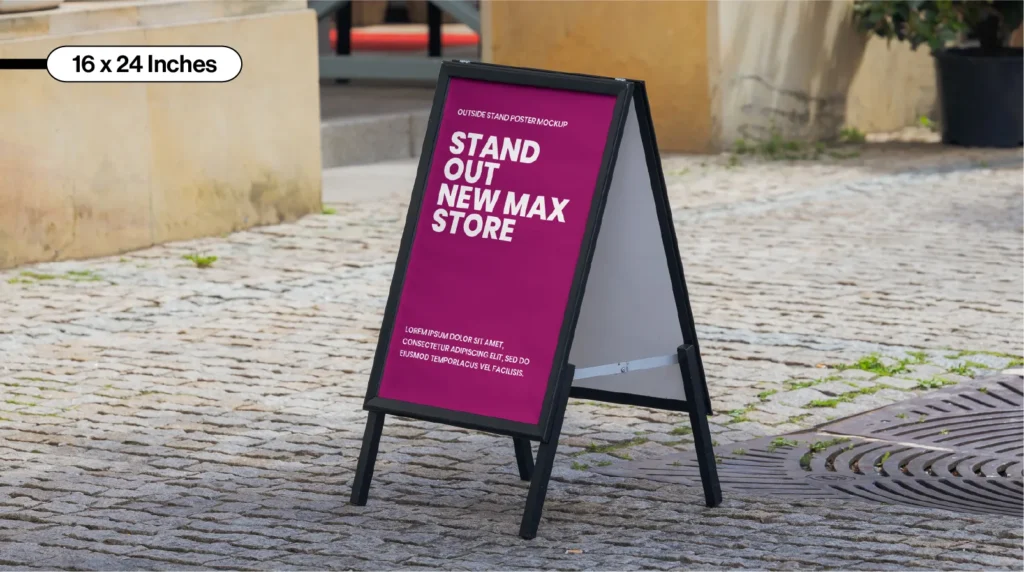
Measuring 16 inches by 24 inches, these compact signs fit narrow walkways, indoor spaces, cafes, boutiques, and food trucks.
Best for:
- Daily specials
- Small storefront promotions
- Indoor directional signage
- Compact sidewalks
Recommended viewing distance:
- 5 to 10 feet
Read more: Standard Rack Card Sizes Explained with Dimensions and Uses
2. 22" x 28" A-frame signs
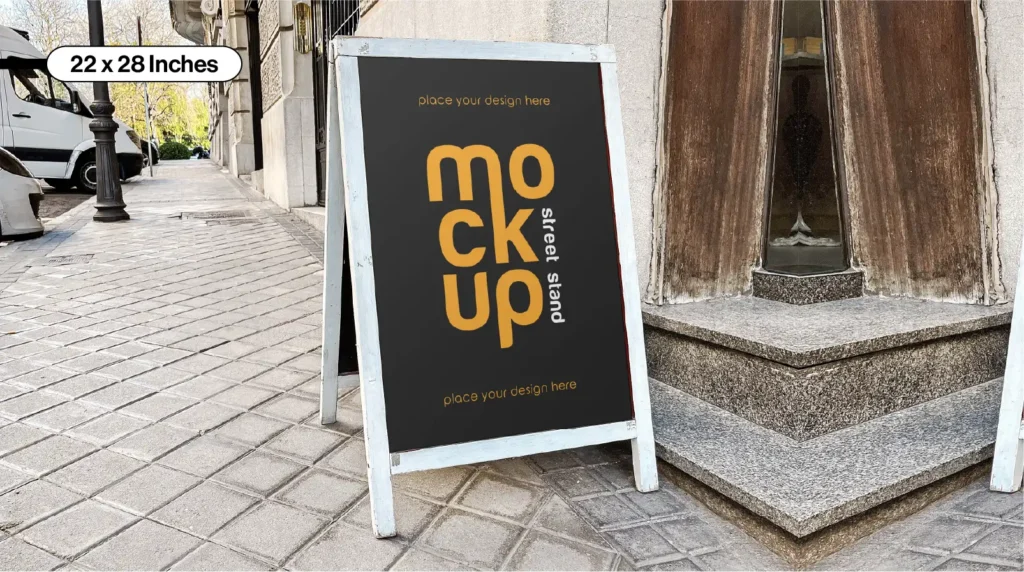
The 22″ x 28″ format balances portability and visibility, making it suitable for both indoor and outdoor environments.
Best for:
- Retail promotions
- Restaurant signage
- Event directions
- Temporary announcements
Recommended viewing distance:
- 10 to 15 feet
3. 24" x 36" A-frame signs
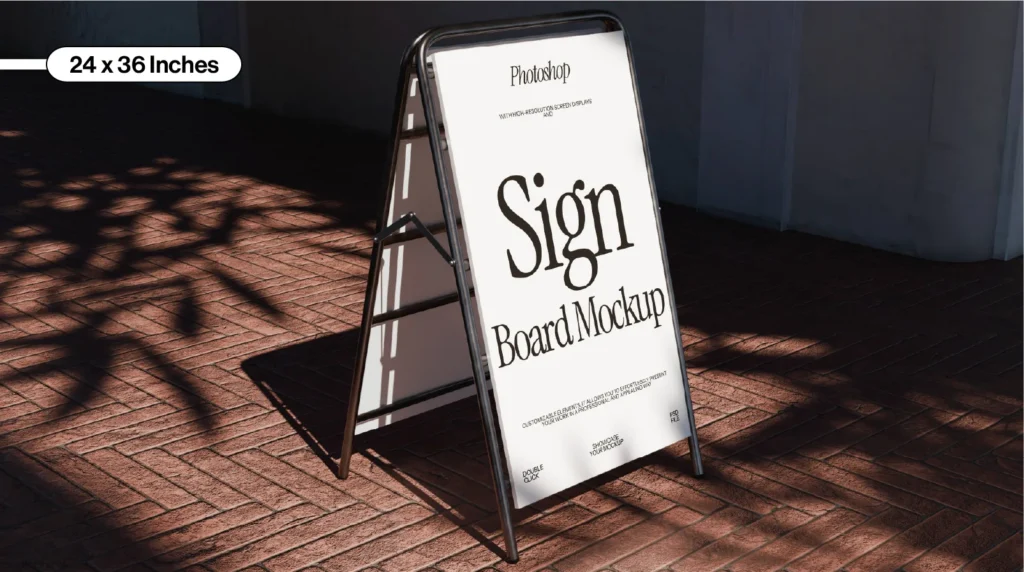
The 24″ x 36″ size is one of the most widely used A-frame formats because it offers strong visibility while remaining portable.
Best for:
- Sidewalk advertising
- Real estate signage
- Event promotions
- High foot traffic storefronts
Recommended viewing distance:
- 15 to 25 feet
4. 25" x 45" Signicade®
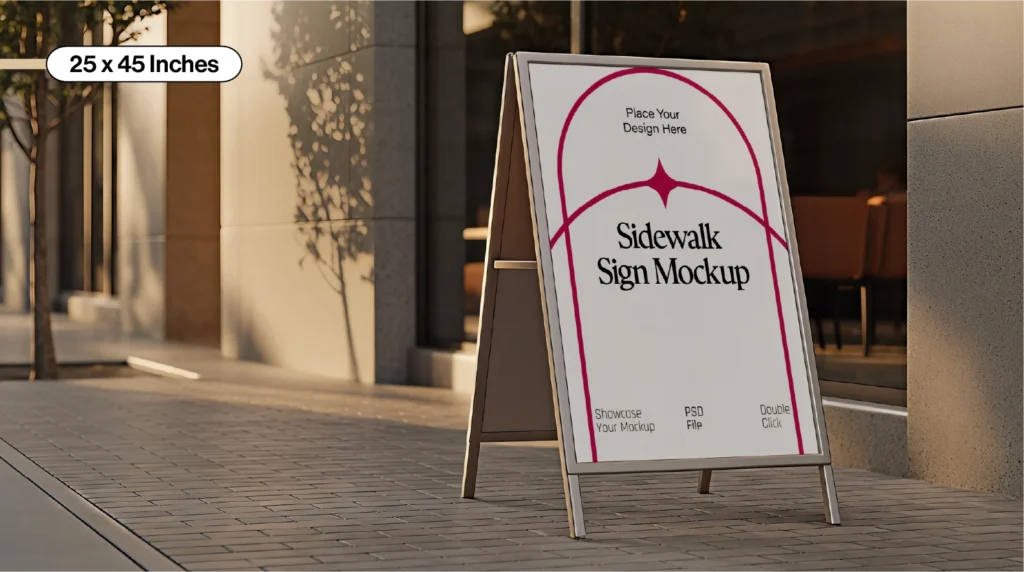
The 25″ x 45″ Signicade® provides increased display space and improved outdoor durability. Its heavier construction helps maintain stability in outdoor environments.
Best for:
- Outdoor business advertising
- Shopping districts
- Restaurants and cafes
- Weather exposed areas
Recommended viewing distance:
- 20 to 30 feet
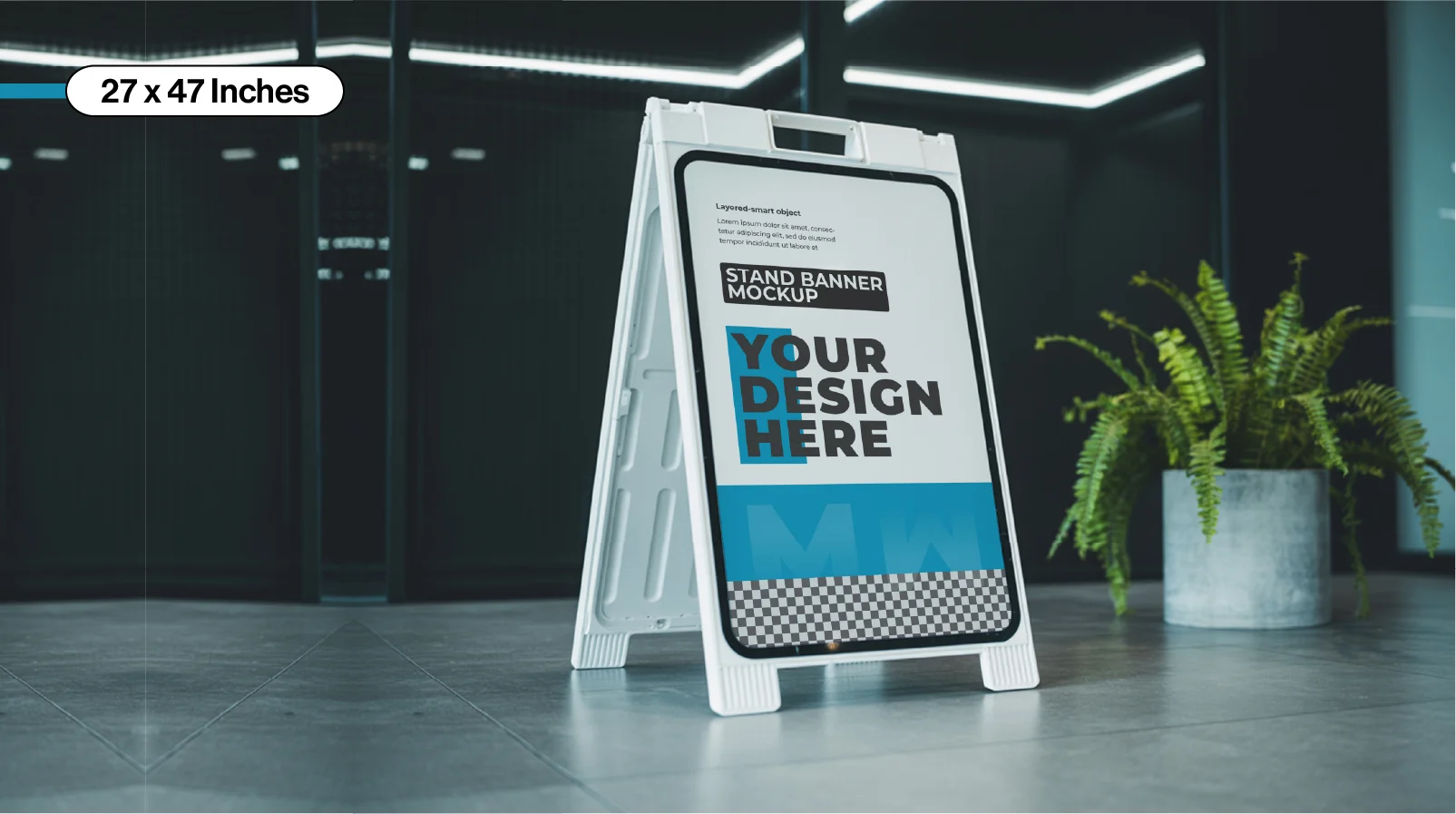
5. 27" x 47" A-frame signs
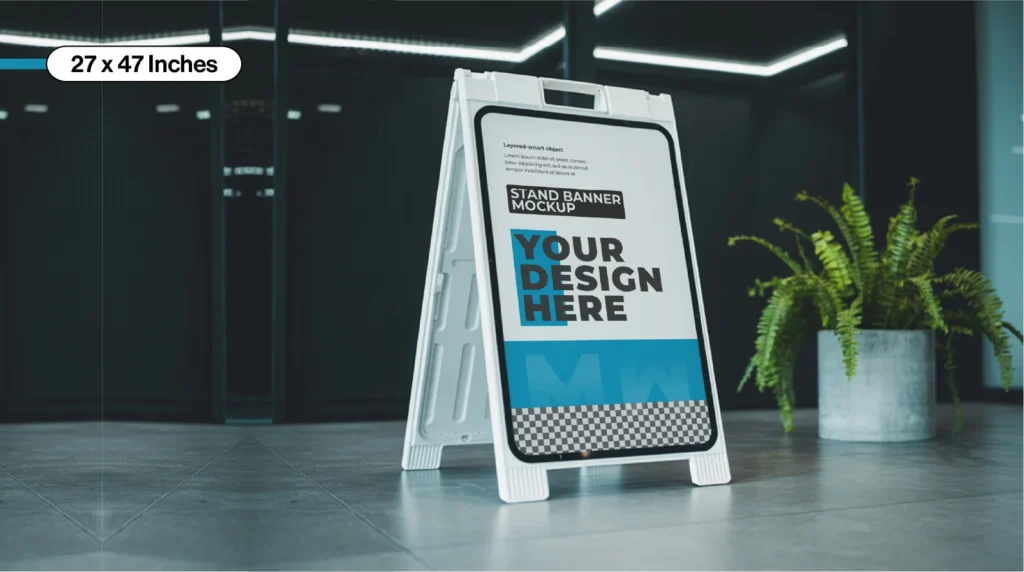
The 27″ x 47″ format offers maximum visibility and is designed for large promotional displays in busy environments.
Best for:
- Street corner advertising
- Large events
- Public venues
- High visibility campaigns
Recommended viewing distance:
- 25 feet and beyond
Common A-frame sign materials
Different A-frame sign materials are designed for specific environments, durability requirements, and display purposes. The material affects outdoor performance, portability, appearance, and long-term usability.
- Plastic Signicade signs: Designed for outdoor use with strong weather resistance and stable construction.
- Metal A-frame signs: Provide a premium appearance with durable frame support for retail environments.
- Chalkboard A-frame signs: Allow reusable handwritten messaging for menus, specials, and promotions.
- Coroplast insert signs: Offer lightweight construction and easy graphic replacement for temporary campaigns.
Industries that commonly use A-frame signs
A-frame signs are widely used across industries because they improve visibility, promote offers, and help guide customers in high-traffic environments.
- Restaurants and cafes: Commonly used for displaying menus, daily specials, and promotional offers.
- Retail stores: Help increase walk-in traffic through sales promotions and seasonal advertising.
- Real estate businesses: Used for open house directions and property visibility.
- Events and exhibitions: Support visitor guidance, event announcements, and directional signage.
- Schools and community centers: Display notices, schedules, and public event communication.
What factors should you evaluate when selecting A-frame dimensions?
The effectiveness of an A-frame sign depends on visibility, placement conditions, message readability, and portability. Evaluating these factors helps determine the most suitable sign size for the environment.
- Placement environment: Larger signs improve outdoor visibility, while compact sizes fit indoor or narrow spaces better.
- Message complexity: Signs with more text or graphics require larger display areas for readability.
- Viewing distance: Bigger signs improve long-distance visibility and message clarity.
- Durability requirements: Outdoor conditions require stronger materials with better weather resistance.
- Mobility needs: Lightweight signs are easier to move frequently, while heavier signs improve stability outdoors.
Conclusion
A-frame sign dimensions directly affect visibility, readability, portability, and advertising impact. Smaller formats are suitable for compact indoor spaces and quick messaging, while larger Signicade styles improve outdoor visibility in busy commercial areas. The most effective size depends on viewing distance, message content, placement environment, and durability requirements.
About the author

With over 15 years of industry experience, I help businesses create high quality print and promotional materials that strengthen brand presentation and marketing impact.