One of the outdoor marketing activities a brand can use to boost visibility is an advertising flag, but the size of the flag matters a lot. A flag that is too small may blend into the background, while an oversized flag can overwhelm the space and reduce effectiveness.
The right flag dimensions help keep your message visible, legible, and professional, whether displayed outside a store, at an exhibition, or during an outdoor event. Understanding standard advertising flag sizes also makes it easier to select suitable materials, optimize placement, and improve durability in different environments.
In this blog you will get to know the common flag sizes, their applications, material choices, placement strategies, and tips for maximizing visibility to ensure every flag delivers impact.
Key Takeaways
- The right advertising flag size depends on the display location, viewing distance, available space, and intended application, ensuring maximum visibility and readability.
- Standard advertising flags are available in feather, teardrop, rectangular, vertical, and crest styles, each designed for different branding and promotional needs.
- Proper materials, installation, and maintenance help improve durability, weather resistance, and the overall effectiveness of advertising flags.
What is the standard size of Advertising flags?
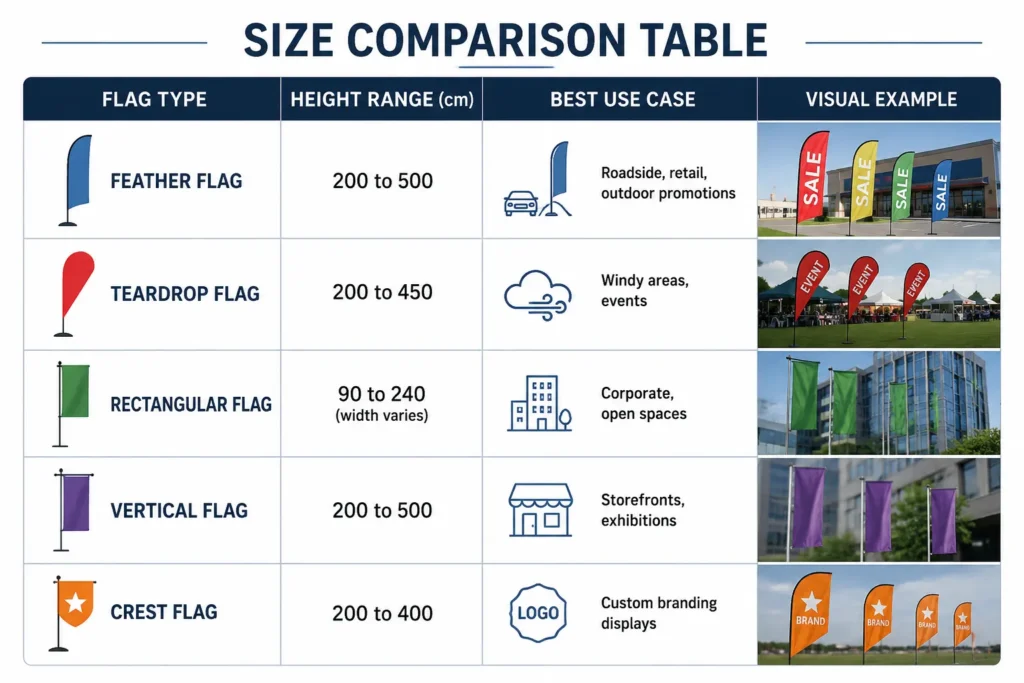
Standard advertising flag sizes vary based on the flag type, such as feather, teardrop, rectangular, or vertical. Most manufacturers offer a range of standard dimensions to suit different advertising needs and display environments.
Feather flags (Sail Flags)
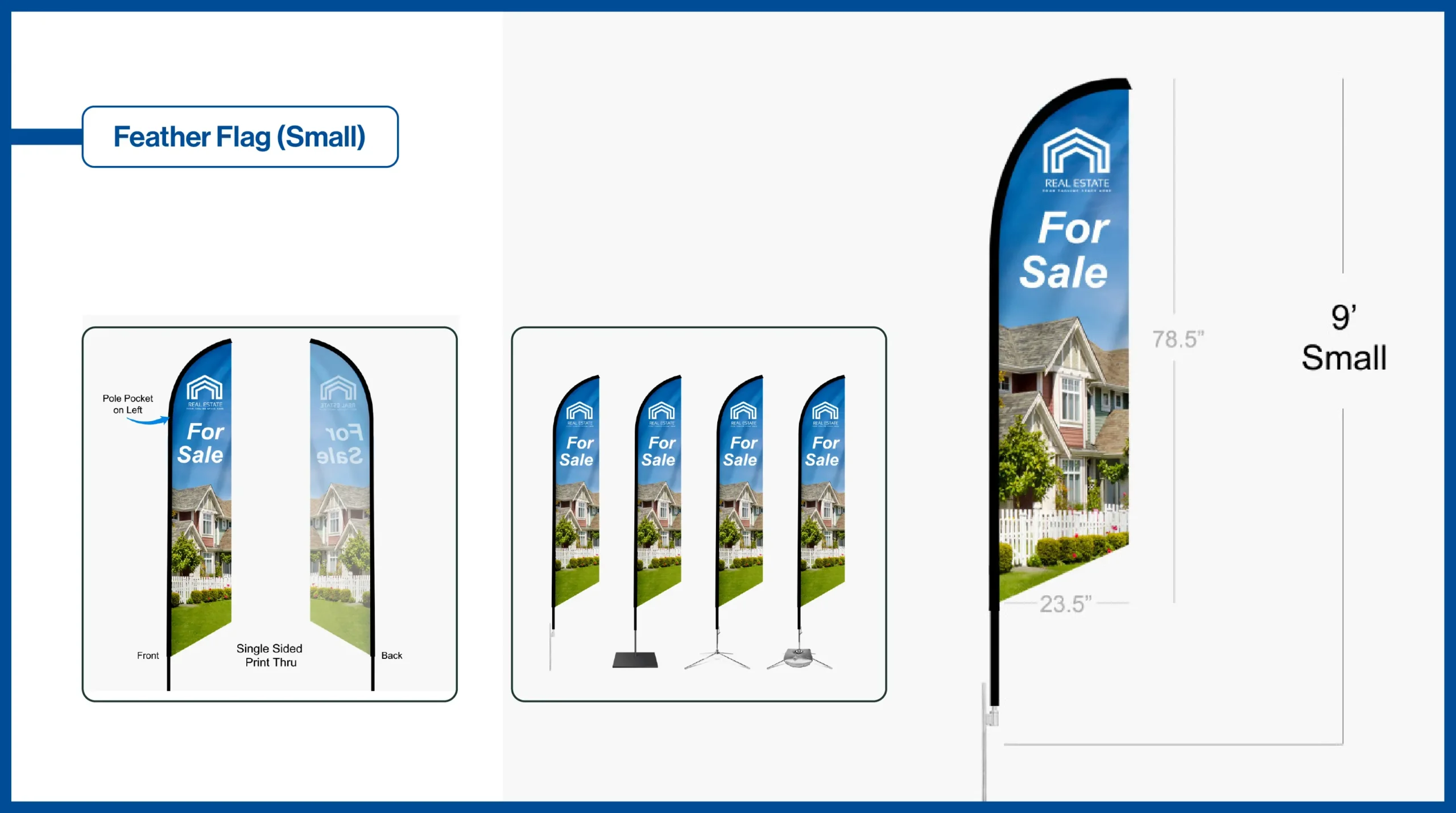
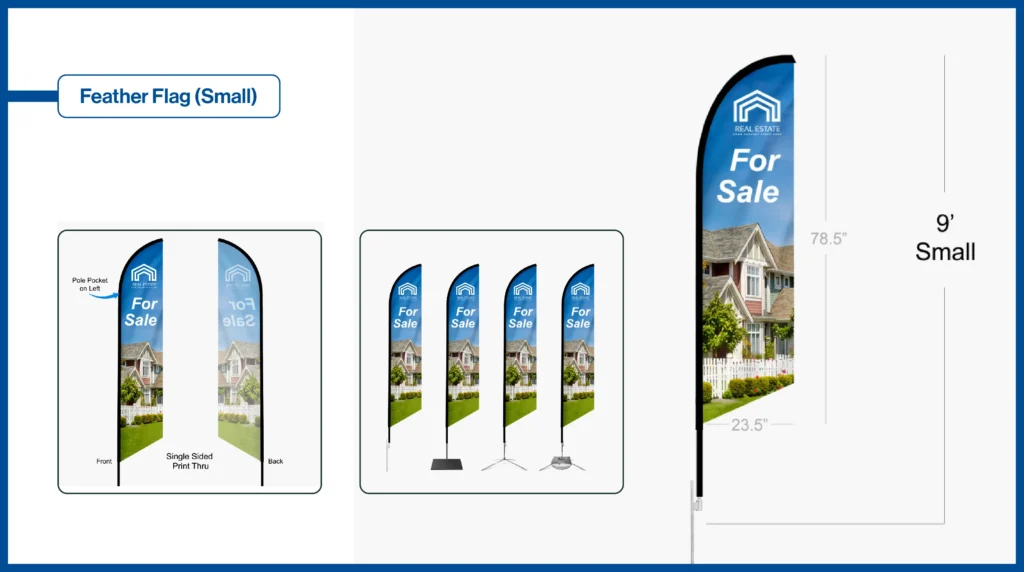
Feather flags feature a tall, curved shape that stays visible even in light wind, making them ideal for retail stores, events, and roadside promotions.
- Small (200–250 cm): Best for indoor displays, small shops, and reception areas.
- Medium (300–350 cm): Ideal for storefronts, trade shows, and outdoor events.
- Large (400–500 cm): Suitable for roadside advertising, festivals, and sports venues.
Read more:20 Creative Outdoor Signs to Boost Your Small Business
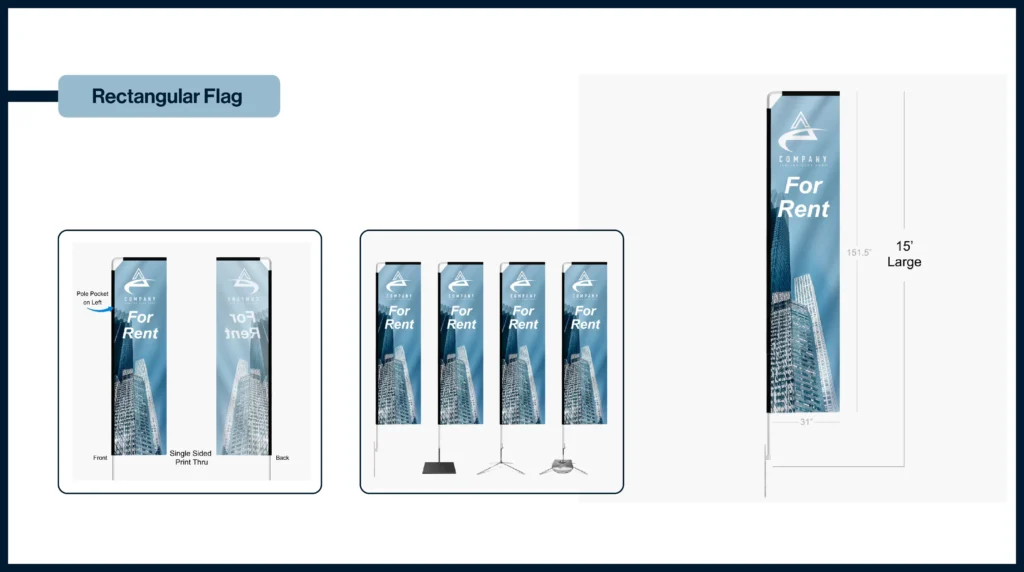
Rectangular flags (Horizontal Flags)
Rectangular flags offer a traditional display with ample space for logos, text, and promotional messages.
- Small (60 × 90 cm): Suitable for indoor branding and small displays.
- Medium (90 × 150 cm): Ideal for storefronts, offices, and events.
- Large (120 × 180 cm to 150 × 240 cm): Best for corporate branding and open outdoor spaces.
Teardrop flags
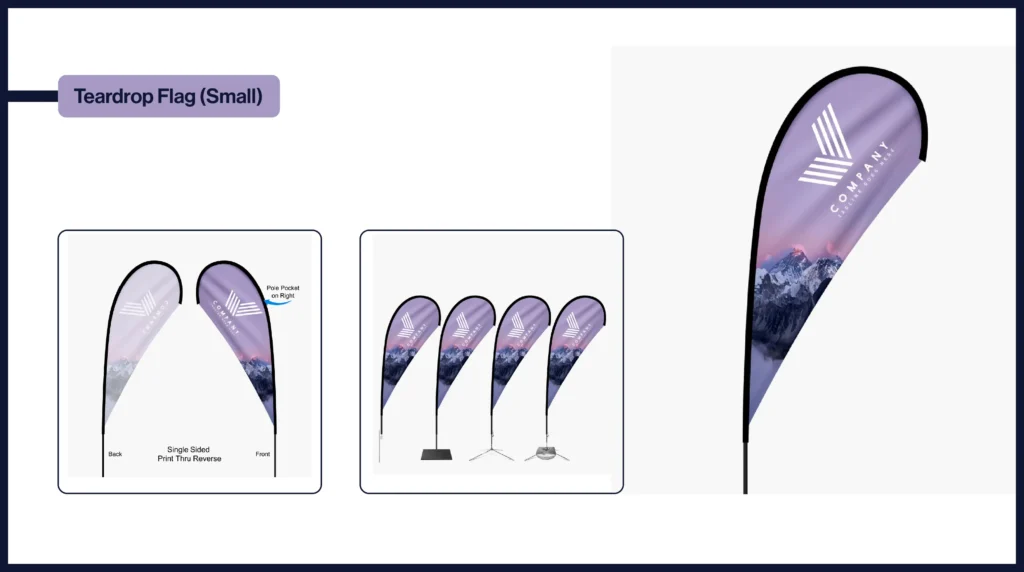
Teardrop flags use a tensioned design that keeps the fabric taut, making them highly visible in windy conditions.
- Small (200–250 cm): Best for indoor promotions and exhibitions.
- Medium (300–350 cm): Suitable for retail stores, events, and business entrances.
- Large (400–450 cm): Ideal for outdoor events, sponsor branding, and roadside advertising.
Vertical flags (Pole with Arm / Banner Flags)
Vertical flags use a support arm to keep the banner fully extended, ensuring consistent visibility even without wind.
- Small (60 × 200 cm): Best for exhibitions and indoor displays.
- Medium (80 × 300 cm): Suitable for retail entrances and promotions.
- Large (90 × 400 cm to 100 × 500 cm): Ideal for outdoor advertising and large commercial spaces.
Crest flags (Custom-Shaped Flags)
Crest flags feature custom-shaped designs that help brands stand out in crowded environments.
- Small (200–250 cm): Suitable for indoor events and promotional displays.
- Medium (300–350 cm): Ideal for retail branding and exhibitions.
- Large (350–400 cm): Best for outdoor campaigns, festivals, and corporate events.
How to choose the right flag size for advertising?
Several factors influence the ideal advertising flag size, including where the flag will be displayed, how far it needs to be seen, and the amount of available space. Matching the flag size to its environment helps maximize its impact.
Location
The display location plays a major role in determining the ideal flag size.
- Indoor: Flags between 200 cm and 300 cm are ideal for exhibitions, shopping malls, and showrooms where space is limited.
- Outdoor: Flags between 300 cm and 500 cm provide better visibility for storefronts, roadside promotions, and outdoor events.
Viewing distance
The farther your audience is from the flag, the taller it should be.
- 200–250 cm: Suitable for close-range viewing.
- 300–400 cm: Ideal for medium-distance visibility.
- 400–500 cm: Best for long-distance outdoor advertising.
Available space
Choose a flag size that fits the surrounding area without obstructing walkways or nearby displays. Larger spaces can accommodate taller flags, while compact locations benefit from smaller options.
Purpose
The intended use also influences the right size.
- Exhibitions: Small to medium flags.
- Retail storefronts: Medium flags.
- Roadside advertising and events: Large flags for maximum visibility.
Applications of standard advertising flags
Standard advertising flags are used across a variety of industries to improve visibility, promote brands, and attract attention.
- Retail stores: Medium-sized feather and teardrop flags attract foot traffic, highlight promotions, and improve storefront visibility.
- Exhibitions and trade shows: Compact flags help visitors identify booths while fitting comfortably within limited exhibition spaces.
- Sports events: Large flags enhance sponsor visibility, promote events, and provide effective directional signage.
- Corporate branding: Rectangular and vertical flags reinforce brand identity outside offices, campuses, and commercial buildings with a professional appearance.
Best materials for advertising flags
Selecting the right flag material helps improve durability, color vibrancy, and overall performance in different environments.
- Woven polyester: A durable option that delivers sharp print quality and is suitable for long-term indoor and outdoor use.
- Knitted fabric: Offers greater flexibility, allowing the flag to move naturally while reducing stress in breezy conditions.
- Perforated mesh: Designed to let air pass through the fabric, making it well-suited for locations exposed to stronger winds.
Tips for improving flag visibility
To get the best results from your advertising flag, consider the following:
- Install the flag where it is clearly visible to passing pedestrians or vehicles.
- Select a size that suits the surrounding space and expected viewing distance.
- Use clear, easy-to-read text with high-contrast graphics.
- Avoid placing flags behind trees, signs, or other visual obstructions.
- Inspect and replace worn or faded flags regularly to maintain a professional appearance.
Answering your questions
A 250 cm to 300 cm advertising flag works best for small outdoor events, offering clear visibility within 5 m to 10 m while fitting limited space.
A 300 cm to 350 cm flag suits both indoor and outdoor use, providing visibility from 5 m to 15 m across exhibitions, storefronts, and small events.
Visibility increases with flag height, where a 200 cm flag reads clearly at 3 m to 5 m, while a 500 cm flag remains visible up to 30 m.
About the author

With over 15 years of industry experience, I help businesses create high quality print and promotional materials that strengthen brand presentation and marketing impact.