Restaurants use menus to present food choices in a way that is easy to read and quick to navigate. The right menu size improves readability, creates balanced layouts, and helps customers find items without feeling overwhelmed. A menu that is too small can make text appear cramped, while an oversized format may waste space and reduce visual balance.
Restaurant menus are available in a variety of standard sizes, each designed to suit different layouts, dining styles, and content requirements. From compact café menus to large folded formats for extensive selections, selecting the appropriate dimensions helps organize information clearly while creating a professional presentation.
In this blog, you will get to know the standard menu sizes, their use cases, layout structure, and design practices that improve readability and customer experience.
Key Takeaways
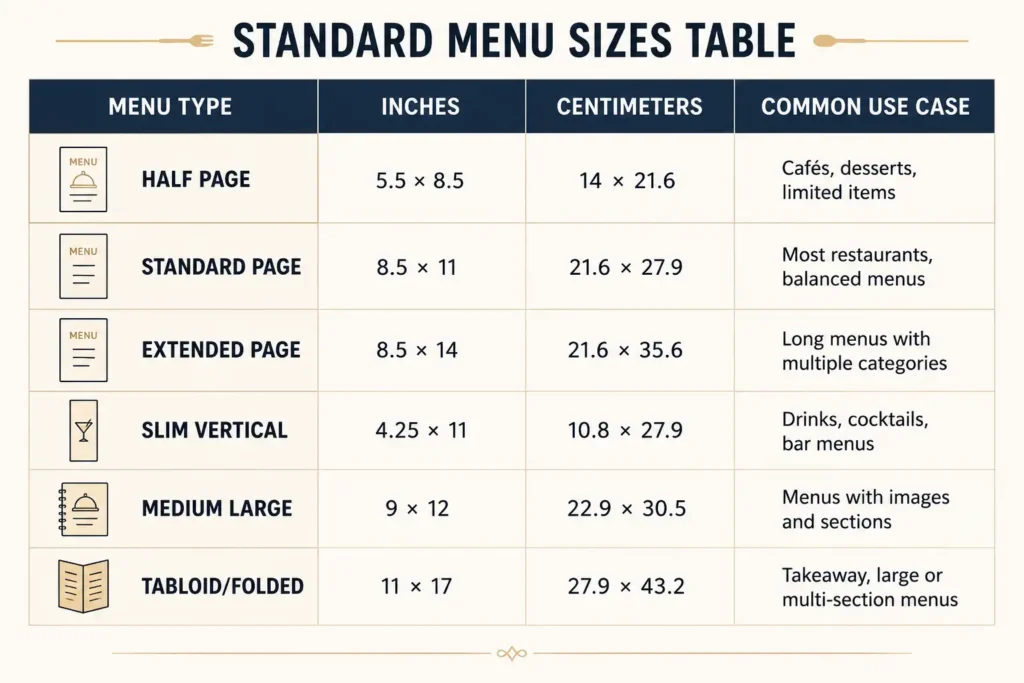
- Standard menu sizes include Half Page (5.5 × 8.5 in), Standard Page (8.5 × 11 in), Extended Page (8.5 × 14 in), Slim Vertical (4.25 × 11 in), Medium Large (9 × 12 in), and Tabloid/Folded (11 × 17 in).
- The right menu size improves readability, organization, and customer experience by providing adequate space for menu items, pricing, images, and categories.
- Choose a menu size based on your content, restaurant type, and layout needs to create a menu that is easy to read, handle, and navigate.
What are the standard menu sizes?
The standard restaurant menu sizes include 5.5 × 8.5 inches (Half Page), 8.5 × 11 inches (Standard Page), 8.5 × 14 inches (Extended Page), 4.25 × 11 inches (Slim Vertical), 9 × 12 inches (Medium Large), and 11 × 17 inches (Tabloid or Folded).
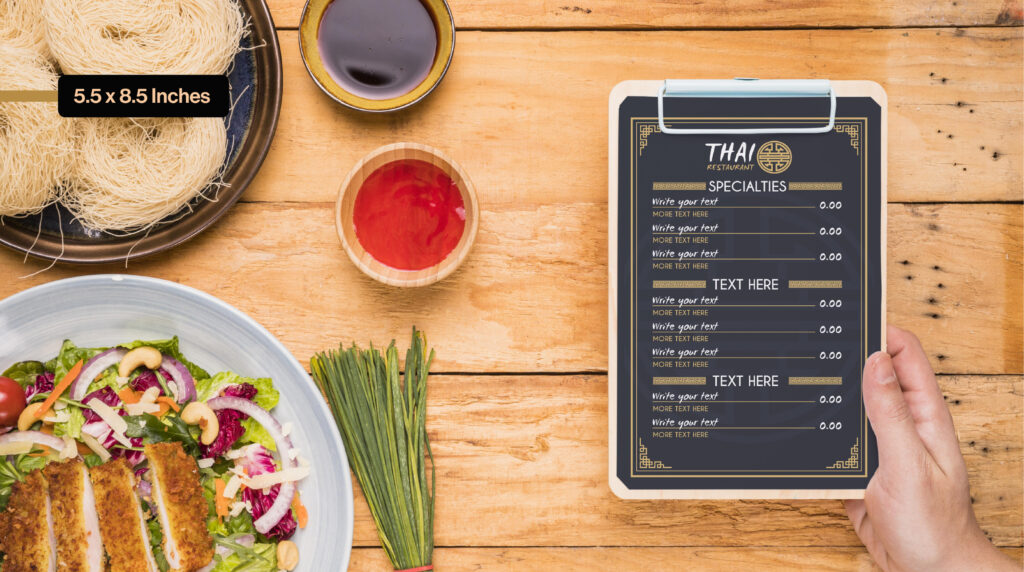
Half page menu size
5.5 × 8.5 inches (14 × 21.6 cm)
Half-page menus suit short item lists where quick decisions matter. Cafés, dessert counters, and small food outlets use this format to present limited options without overwhelming customers. The compact size makes the menu easy to hold, pass around, and place on smaller tables. To maintain readability, keep descriptions brief and pricing clear.
Common uses:
- Cafés and coffee shops
- Bakeries and dessert menus
- Breakfast and brunch menus
- Kids’ menus
- Limited-time or seasonal menus
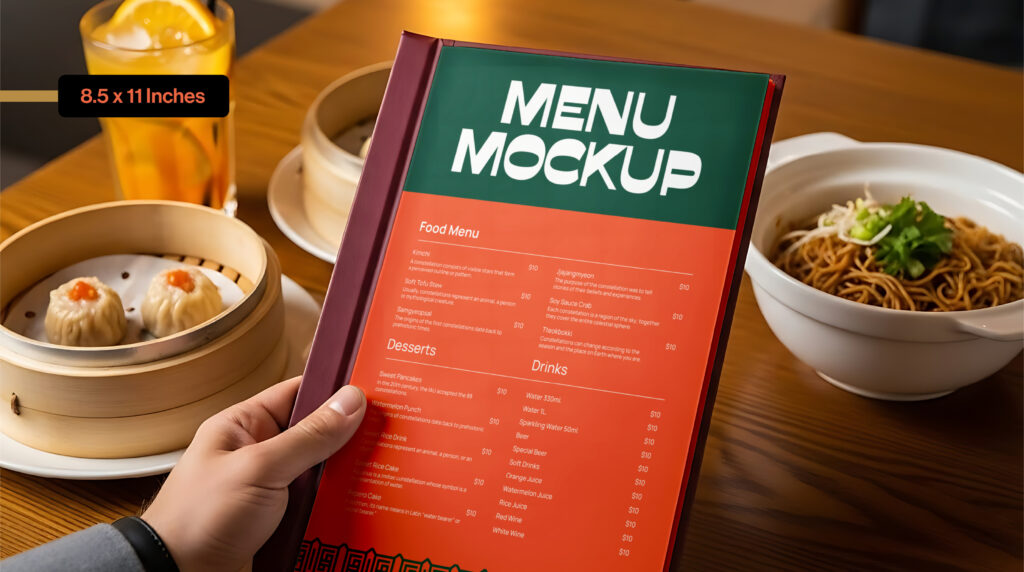
Standard page menu size
8.5 × 11 inches (21.6 × 27.9 cm)
The standard page is the most commonly used restaurant menu size. It provides enough space for categories, item descriptions, pricing, and small images without making the layout feel crowded.
Common uses:
- Casual dining restaurants
- Family restaurants
- Hotel restaurants
- Lunch and dinner menus
- Everyday dine-in menus
Read more:Outdoor Advertising Flag Sizes
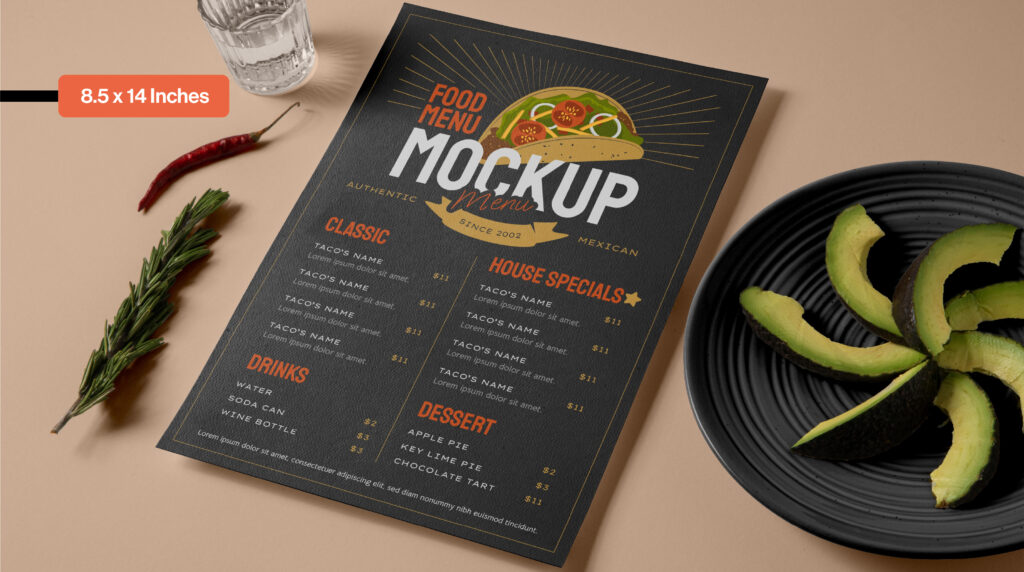
Extended page menu size
8.5 × 14 inches (21.6 × 35.6 cm)
Extended page menus provide additional vertical space for restaurants with larger menus or multiple categories. The extra length allows content to remain on a single sheet while improving spacing between sections. This helps reduce visual clutter and makes the menu easier for customers to scan.
Common uses:
- Restaurants with extensive menus
- Multi-cuisine restaurants
- Buffet menus
- Seasonal or rotating menus
- Menus with detailed item descriptions
Read more:Standard Bumper Sticker Sizes Explained
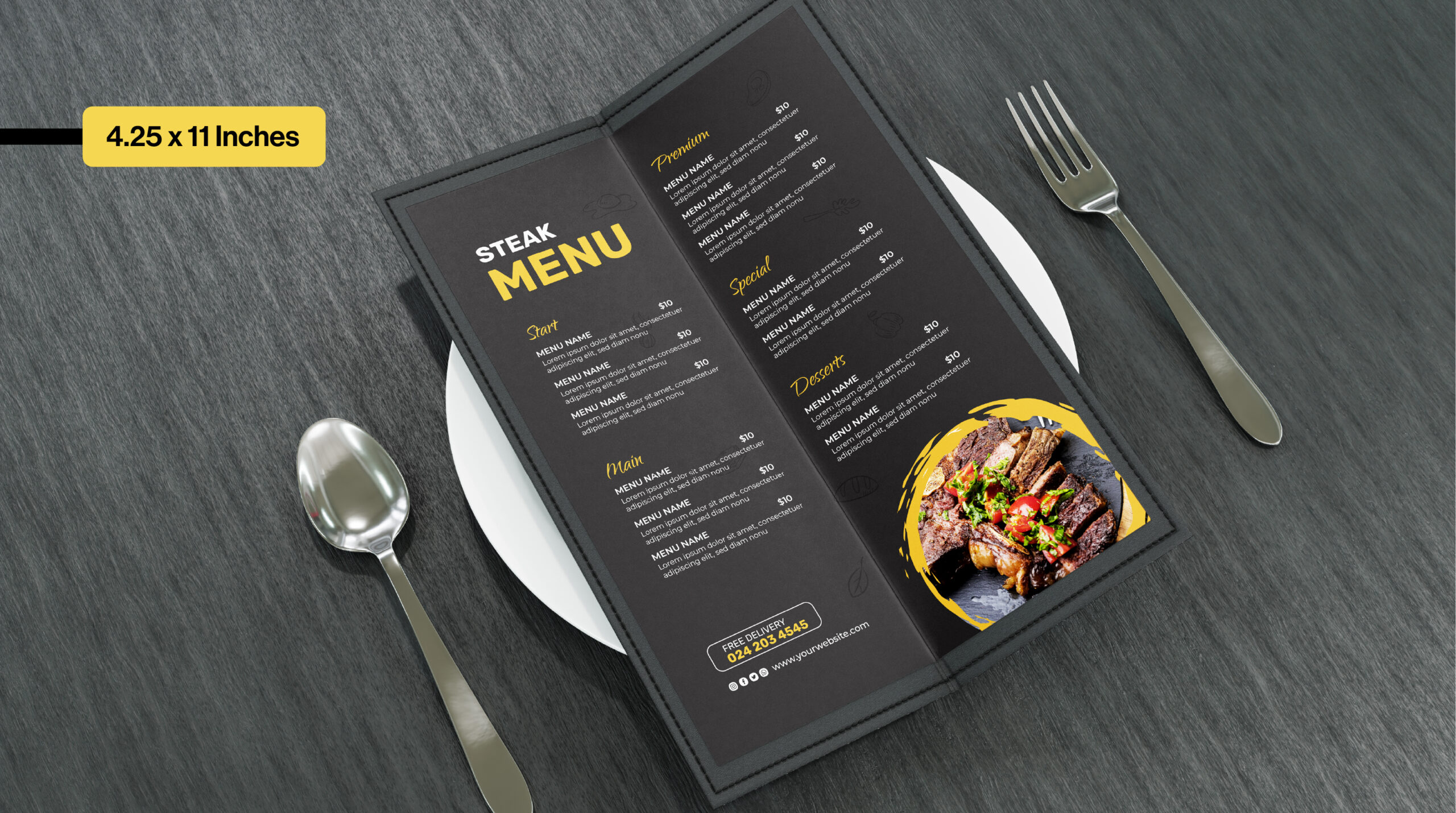
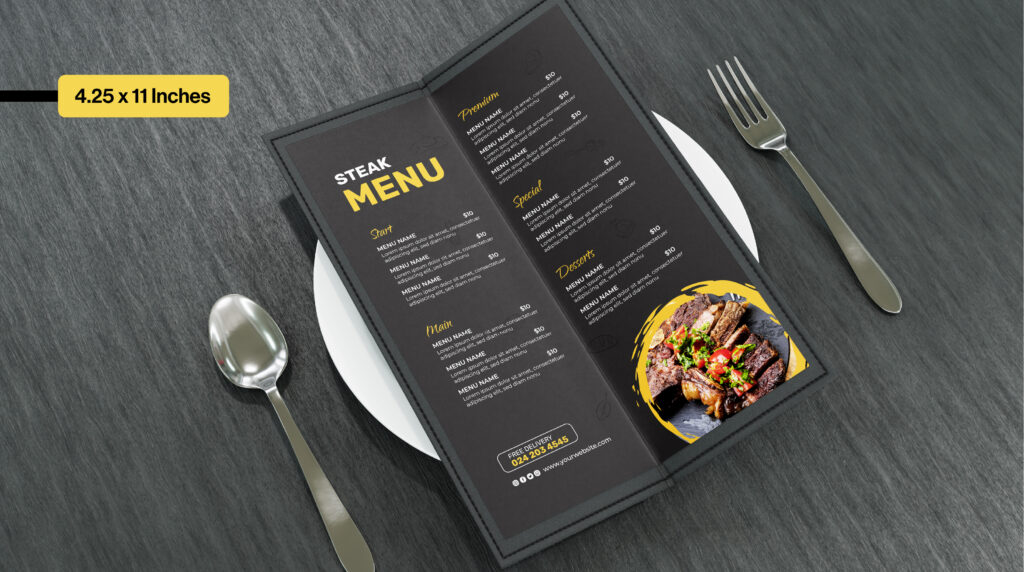
Slim vertical menu size
4.25 × 11 inches (10.8 × 27.9 cm)
Slim vertical menus are ideal for beverage lists, cocktails, wines, and daily specials. Their narrow layout creates a clean, structured presentation that customers can scan quickly. Since the available width is limited, item names and descriptions should remain concise to maintain readability.
Common uses:
- Cocktail menus
- Wine and beer lists
- Beverage menus
- Happy hour menus
- Daily specials
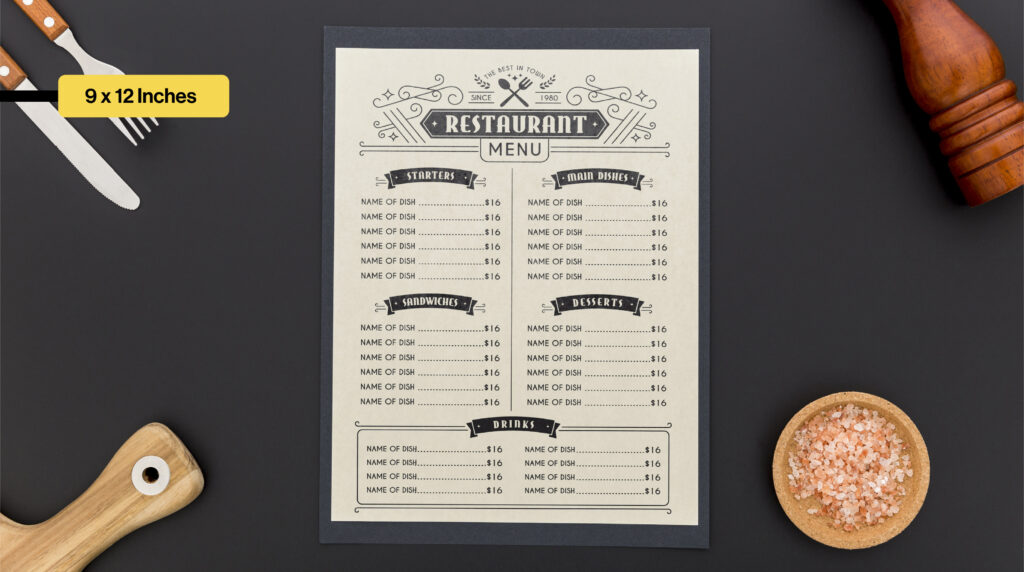
Medium large menu size
9 × 12 inches (22.9 × 30.5 cm)
Medium large menus provide extra design space for restaurants that include food photography, featured dishes, or promotional sections. The larger format improves visual hierarchy and spacing while remaining comfortable to hold and easy to browse.
Common uses:
- Fine dining restaurants
- Restaurants with food photography
- Premium menu presentations
- Chef’s specials
- Signature dish menus
Read more: Standard Tablecloth Sizes for Event Tables
Tabloid or folded menu size
11 × 17 inches (27.9 × 43.2 cm)
Tabloid menus are suitable for restaurants with extensive food and beverage selections. When folded, they create multiple panels that organize categories such as appetizers, main courses, beverages, desserts, and specials. This format accommodates more content while maintaining readability and a logical layout.
Common uses:
- Takeaway menus
- Pizza and fast-food restaurants
- Restaurants with large menus
- Multi-section restaurant menus
- Promotional and seasonal menus
How to choose the right menu size?
The right menu size depends on your menu content, restaurant style, and customer experience. Consider these factors before selecting a format.
- Content length: Choose a size that accommodates all menu items without overcrowding. 5.5 × 8.5 inches works well for limited menus, 8.5 × 11 inches suits standard menus, while 8.5 × 14 inches and 11 × 17 inches are ideal for extensive selections.
- Menu type: Match the menu size to its purpose. 8.5 × 11 inches and 9 × 12 inches are suitable for dine-in menus, 11 × 17 inches is ideal for folded takeaway menus, and 4.25 × 11 inches works best for beverage and cocktail menus.
- Readability: Select a size that allows clear fonts, proper spacing, and organized sections. If the layout feels cramped, choose a larger menu instead of reducing the font size.
- Table space and handling: Consider how customers will use the menu. Compact sizes fit smaller tables and are easier to hold, while larger formats are better suited for spacious dining areas.
- Design requirements: Menus with only text require less space, whereas menus featuring food photography, highlighted dishes, promotional sections, or detailed descriptions benefit from larger formats such as 9 × 12 inches or 11 × 17 inches.
- Printing and folding: If you plan to use bi-fold or tri-fold menus, choose standard sizes like 11 × 17 inches for easier printing, folding, and compatibility with menu covers.
About the author

With over 15 years of industry experience, I help businesses create high quality print and promotional materials that strengthen brand presentation and marketing impact.