Although many business communications now happen digitally, printed letterheads continue to play an important role in professional correspondence. From official letters and invoices to contracts and proposals, a well-designed letterhead presents essential business information while reinforcing a company’s brand identity.
The effectiveness of a letterhead depends not only on its design but also on its size. Standard dimensions help maintain consistent layouts, improve readability, and ensure documents print correctly across different printers and regions.
In this guide, you’ll learn about the standard letterhead sizes, their dimensions, common applications, and design best practices for creating professional business stationery.
Key Takeaways
- The most commonly used letterhead sizes are A4 and Letter, as they are the standard formats for business communication in most parts of the world.
- The right letterhead size improves readability, print compatibility, and document structure, ensuring professional and consistent communication.
- An effective letterhead combines the correct size with essential branding elements, including your logo, company name, contact details, and balanced margins for a polished appearance.
What are the standard letterhead sizes?
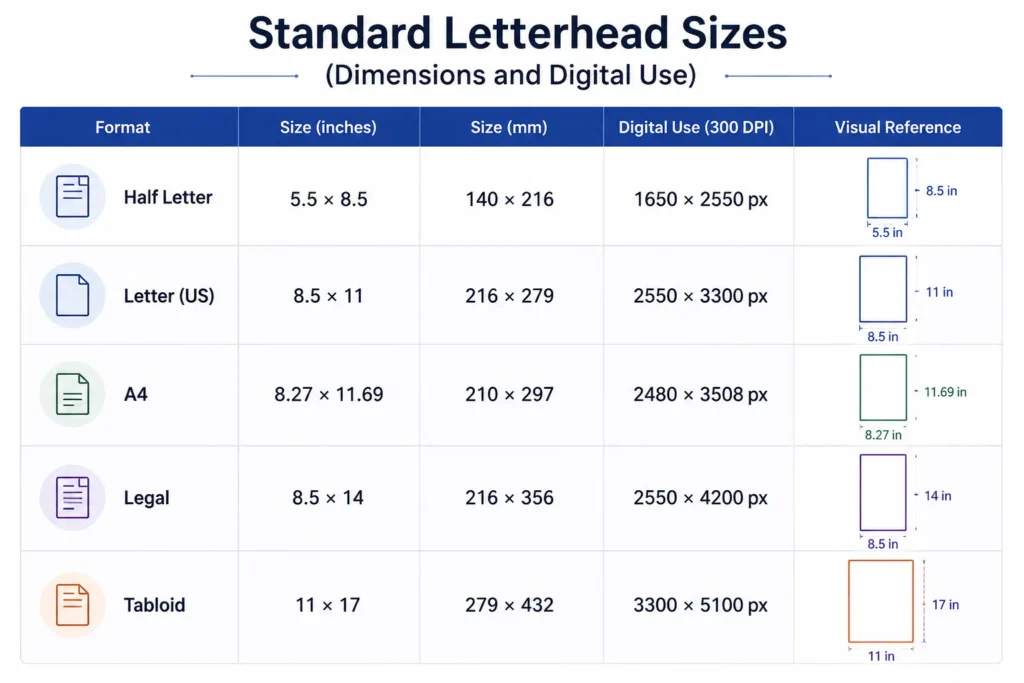
The most commonly used letterhead sizes are A4 and Letter, as they are the standard formats for business communication in most parts of the world. Other sizes, such as Legal, Half Letter, and Tabloid, are used for specific document types and regional requirements. Understanding the purpose of each format helps ensure your documents are well-structured, easy to print, and professionally presented.
A4 Letterhead Size
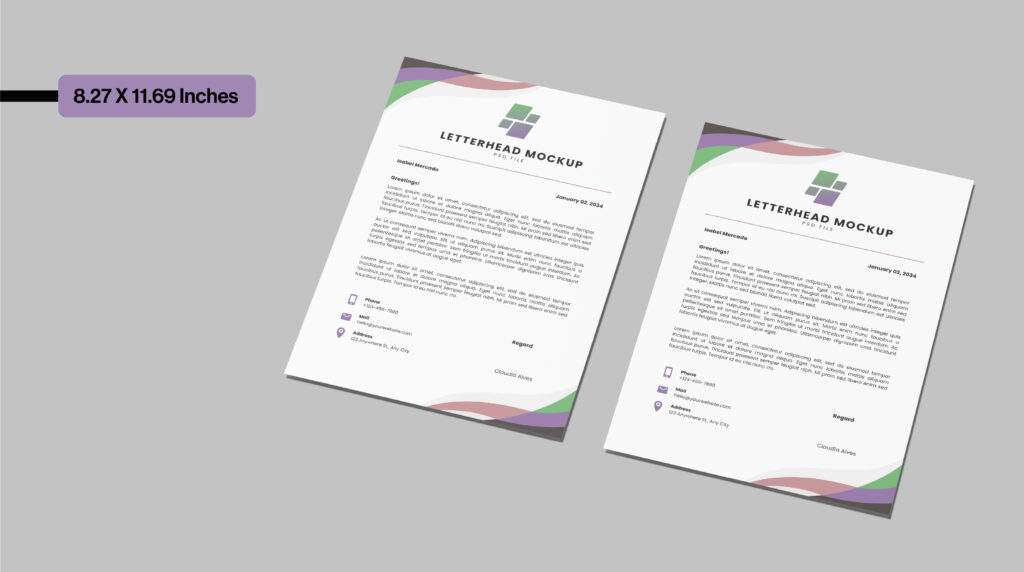
Dimensions: 210 × 297 mm (21 × 29.7 cm or 8.27 × 11.69 inches)
A4 is the most widely used letterhead size worldwide and follows the ISO 216 international paper standard. It is the preferred choice for businesses across Europe, Asia, Australia, and many other regions. Its balanced dimensions provide sufficient space for company branding, contact information, and document content without making the layout appear crowded.
A4 letterheads are commonly used for:
- Business letters
- Company invoices
- Quotations
- Reports
- Official correspondence
- Corporate documentation
Letter size
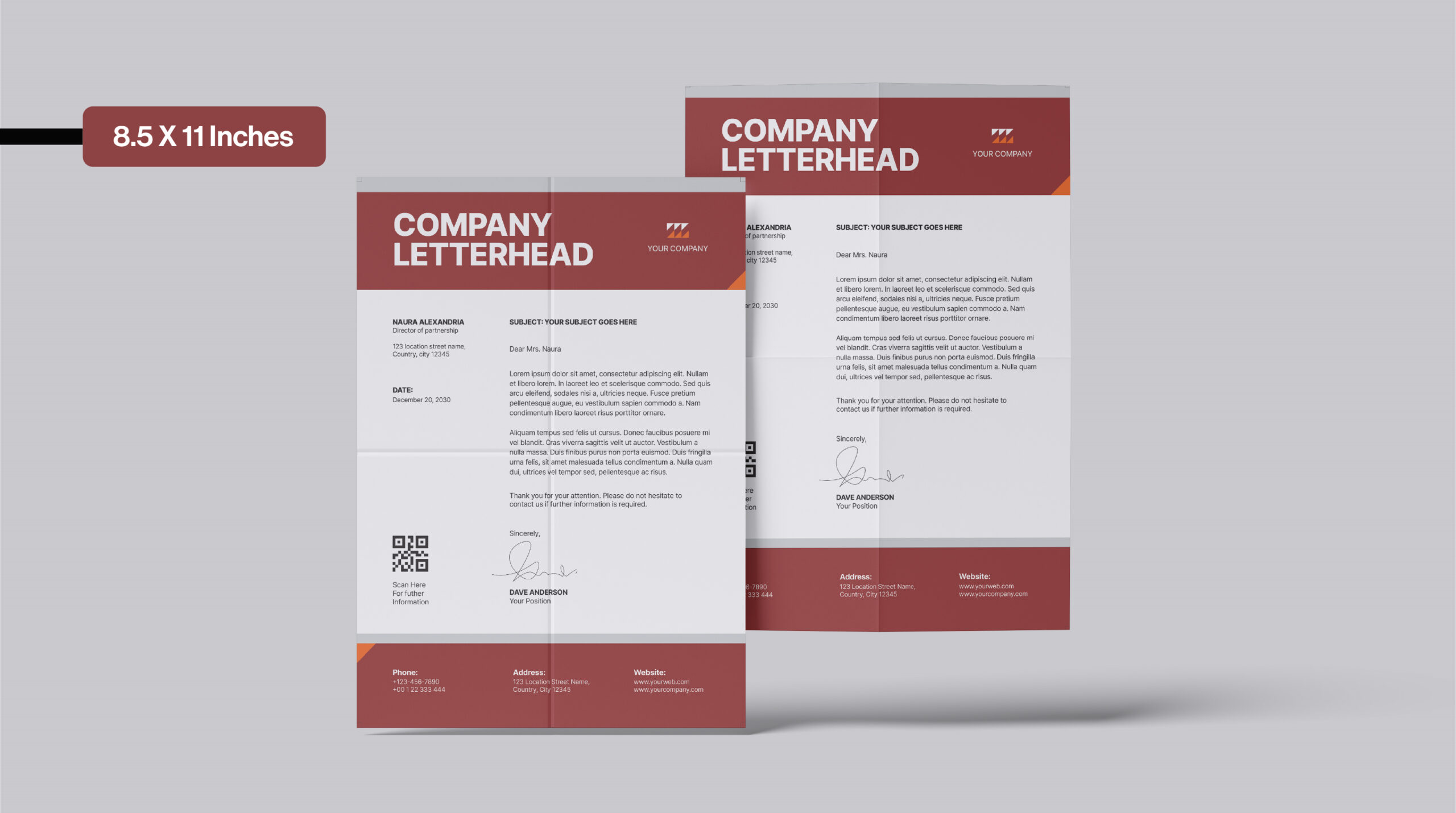
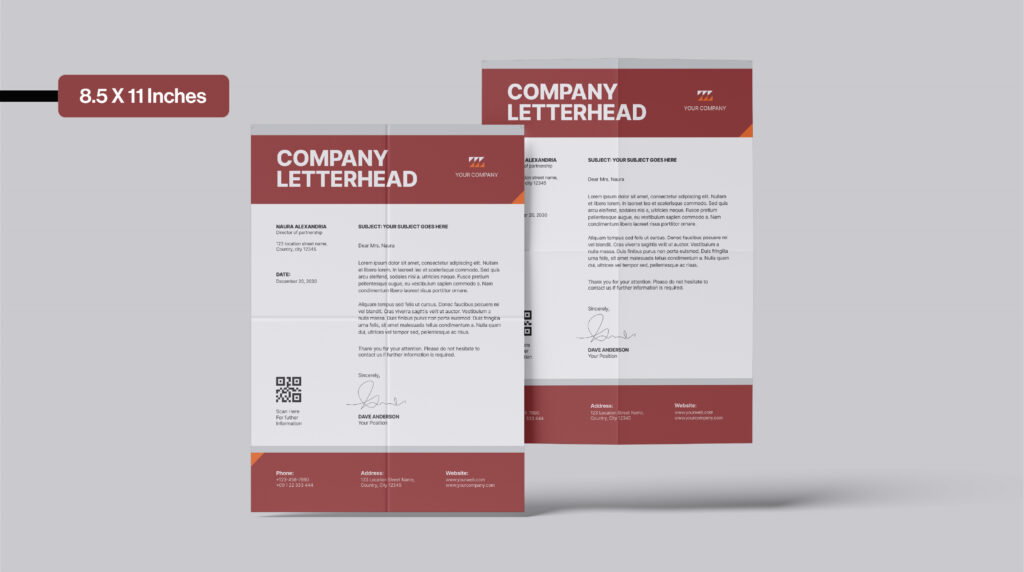
Dimensions: 216 × 279 mm (21.6 × 27.9 cm or 8.5 × 11 inches)
Letter size is the standard paper format used throughout the United States and Canada. It closely resembles A4 but is slightly shorter and wider, making it compatible with North American printing and document management systems.
Businesses that primarily operate within North America typically use Letter size for:
- Client correspondence
- Business proposals
- Internal reports
- Company notices
- Office documentation
Read more:The Complete Guide to all Calendar Sizes
Legal size
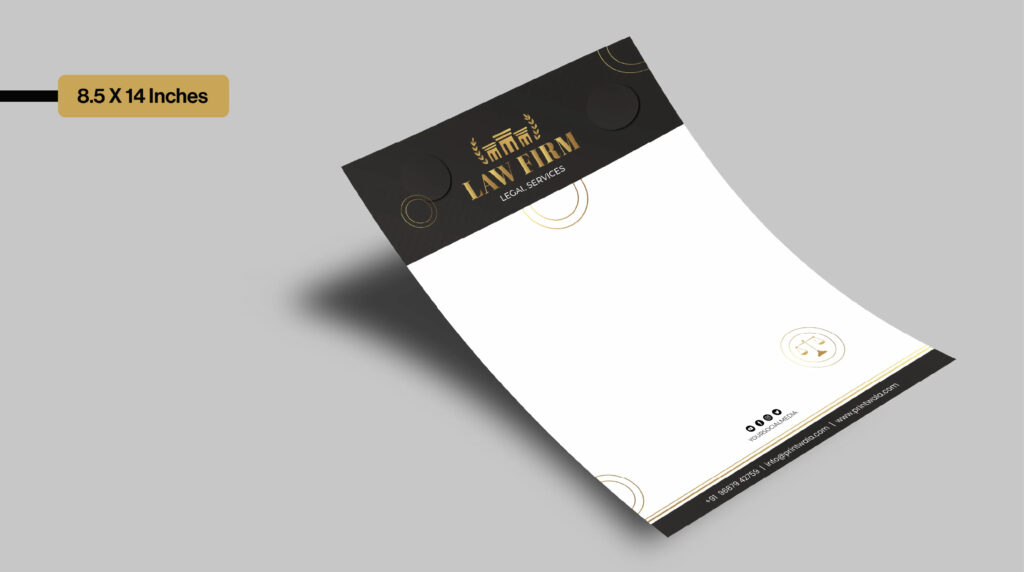
Dimensions: 216 × 356 mm (21.6 × 35.6 cm or 8.5 × 14 inches)
Legal paper provides additional vertical space, making it suitable for documents that contain extensive text or require multiple sections on a single page. Rather than reducing the font size or spreading information across multiple pages, the longer format allows content to remain clear and easy to read.
Legal-size letterheads are commonly used for:
- Contracts
- Legal agreements
- Property documents
- Government forms
- Financial paperwork
Read more: Outdoor Advertising Flag Sizes
Tabloid size
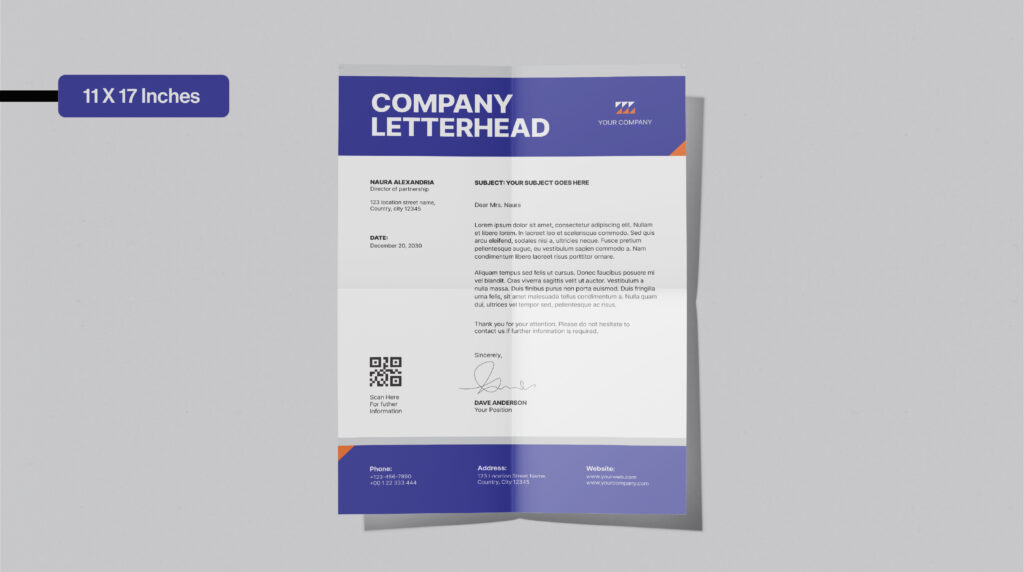
Dimensions: 279 × 432 mm (27.9 × 43.2 cm or 11 × 17 inches)
Tabloid is a large-format paper size designed for documents that require additional space for graphics, diagrams, or complex layouts. Although it is not commonly used for everyday business correspondence, it is valuable when visual presentation is the priority.
Typical applications include:
- Presentation materials
- Marketing brochures
- Architectural drawings
- Engineering plans
- Charts and diagrams
- Product layouts
Read more:Standard Bumper Sticker Sizes
Half Letter size
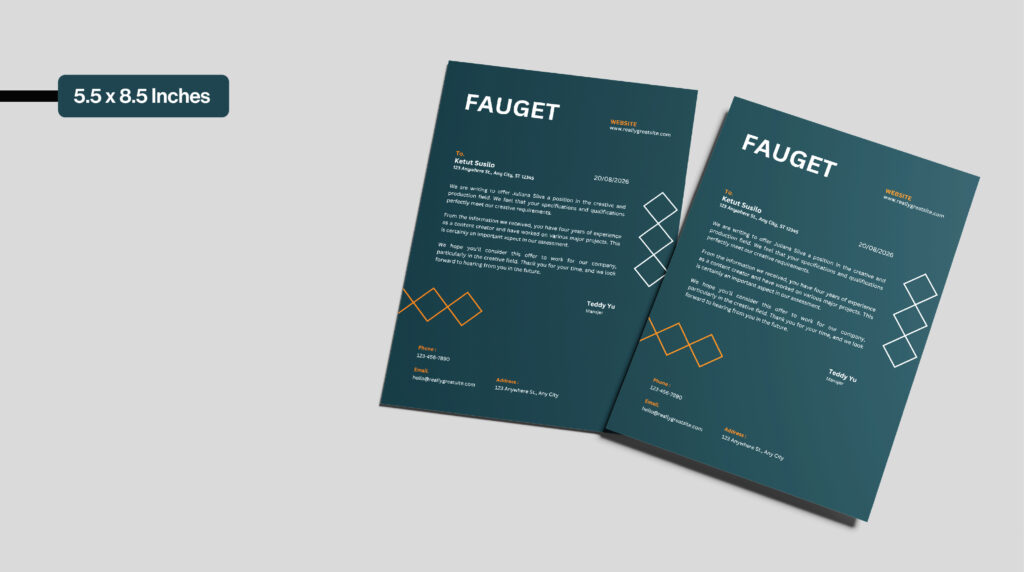
Dimensions: 140 × 216 mm (14 × 21.6 cm or 5.5 × 8.5 inches)
Half Letter is a compact paper format commonly used for shorter documents and internal business communication. Its smaller dimensions make it practical for materials that do not require a full-sized page while helping reduce paper consumption.
Half Letter is often used for:
- Internal memos
- Meeting notes
- Checklists
- Notepads
- Instruction sheets
- Quick reference documents
What should a professional letterhead include?
A professional letterhead should include essential business information while maintaining a clean, organized layout that leaves enough space for the document content.
- Company name and logo: Place them prominently in the header to establish brand identity and make your business easily recognizable.
- Business address: Include your complete mailing address to provide recipients with an official location for correspondence.
- Contact information: Add your phone number, email address, and website to make it easy for clients and partners to reach you.
- Registration or legal information: Include your company registration number, tax ID, or other legally required details where applicable.
- Optional details: Add social media handles, a QR code, department name, or company slogan if they support your branding without cluttering the design.
- Balanced layout: Maintain margins between 1.5 cm and 2.5 cm and use sufficient white space to keep the letterhead neat and readable.
Applications of standard letterhead sizes
Standard letterhead sizes are suitable for a variety of professional documents and business communications.
- Business correspondence: Used for formal letters, client communication, internal memos, and official notices.
- Invoices and billing: Presents invoices, payment requests, and billing statements in a professional and organized format.
- Contracts and legal documents: Legal-sized letterheads provide additional space for agreements, contracts, and compliance documents.
- Business proposals and reports: Maintain a consistent layout for proposals, reports, presentations, and project documentation.
- Corporate branding: Reinforce your brand identity by using a consistent letterhead across all printed business materials.
Answering your questions
A4 size (21 × 29.7 cm) is the most widely used format for business documents.
Letter size (21.6 × 27.9 cm) is used in North America, while A4 dominates globally.
Margins between 1.5 cm and 2.5 cm ensure readability and print safety.
About the author

With over 15 years of industry experience, I help businesses create high quality print and promotional materials that strengthen brand presentation and marketing impact.